More Stories from Google Image Search

Related to the Google image search lesson mentioned in this post, my student today shared an activity he did over his break.

Passing the time during the thanksgiving break, Cristian typed into Google image search “Beverly Hills.” He said he noticed all of the clean streets and smiling white people. Next, he typed into Google image search “South Central Los Angeles.” The contrast is striking: power lines, fast food, gangs, police making arrests.

As a class, we discussed what stories are being told about these communities. What is being left out and why? As we continue to explore the dual cities in Los Angeles, how we’re able to re-mold the story being told will continue to be the charge our class will take up.

Thanks for sharing the lesson, Cristian.

Aggregated Search, Phone Photos and Talkin’ ‘Bout Mobile Media

In the past two days, I’ve received no less than five emails asking me if I’ve seen this article (I have now … thanks to each of you!). Apparently my research interests have been made pretty explicit at this point.

In any case, I was reminded of a couple of impromptu lessons I created that I’d like to share briefly, related to new media and its application within the classroom.

Google Image Search & Assumptions about Success

After a brief writing exercise in which students projected and wrote about their lives ten years in the future, we took to the Internet. As students described the careers they are interested in pursuing – doctor, lawyer, architect, astronomer, engineer, etc. – we typed each word into Google’s image search*. For the most part, the search results didn’t surprise – predominantly white, male faces showed up as the top results. (Try this, if you haven’t already.) As a class, we talked about what the search represented and why it was one that didn’t reflect our class and community demographics. The lesson was a place to continue our application of fancy words like “hegemony” and “counter-narrative” and to think about how this image search could be changed in the future.

I haven’t written this out yet, but I think a next step for us will be to simulate an aggregate search within the classroom on post-it notes. I need to tweak this, but perhaps it will be similar to an analog game like Go Fish or even Pictionary. I think if we can replicate a model where the faces of success look like the ones in our classroom, we can think more critically about applying the experience to the larger world.

* A student – based on his own “experiments” – warned me not to image search “nurse.” I appreciated his candor, but think that – in the future – that search will be ripe for discussion about gender stereotypes and sexual objectification.

Photographing an Argument

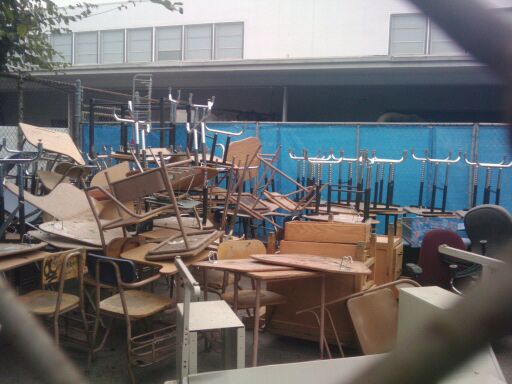
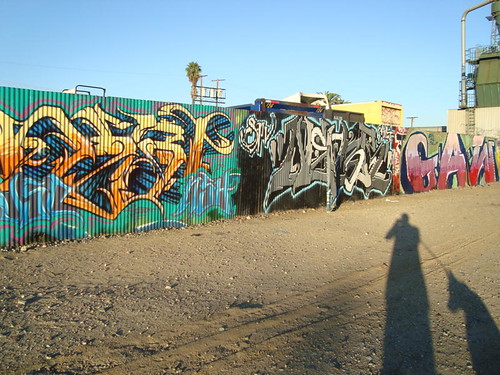
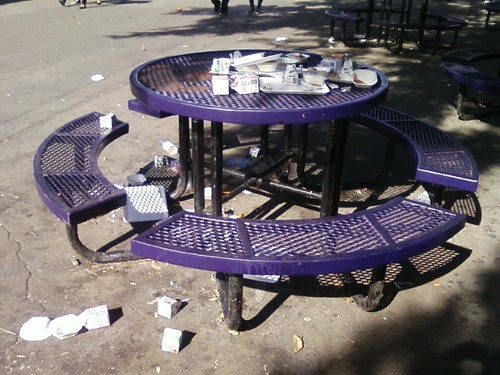
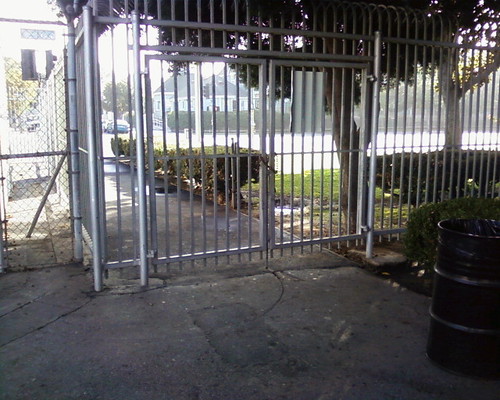
The next assignment was just as simple. Students needed to email or text me a photo they took somewhere in their neighborhood. They would then use the photo to construct an essay-length argument about their community. By the following week, students shared their photos in small groups and then hosted a class-wide curated slide show. (My students took all of the photos in this post in and around our school.)

Again, the assignment itself isn’t novel. However, I found it impressive how – other than a few students that didn’t adhere to the deadline and subsequently borrowed my classroom camera to snap shots around the school – the majority of the students were able to quickly text or email me their photos on time. That our school’s wireless network is faulty or not open to student access, that many students don’t own computers, and the many other concerns that educators have with technology didn’t stand in the way of students taking carefully constructed photos and getting them to me in a way that could be easily shared and projected. Further, if you haven’t been snapping photos on your phone lately, you’d be impressed with the quality. And hearing students discuss the angles, lighting, color, and compositional features of their pictures was also promising. Did mobile media revolutionize my curriculum? No. It did, however, validate the skills and abilities my students had and helped bridge them toward standards-aligned instruction.

A Few Summative Thoughts

Going back to the article that kick started this post, I guess my larger concern with mobile media isn’t if students are cheating or abusing their phone privileges. Instead, I’m interested in student positioning and understanding of the mobile device and of themselves as authors and creators. As we inevitably move toward the eventual acceptance of phones in the classroom, it will be useful for us to construct a foundation on which students can think responsibly about media and their role in consuming and creating it. This may sound like I’m either spewing abstract hogwash or stating the obvious to some, depending on where you stand on the tech debate. I’ll be piloting this theoretical foundation within my classroom later this year, with activities and texts ranging from cell phone ”Freeze Tag” (for lack of a better name) to diving into the words of Bruno Latour. Of course suggestions are always considered and appreciated.

No, Wikipedia, Your Bad

In a not so searing rant to a friend, I wanted to discuss the (likely Clueless-derived) etymology of the phrase “my bad.” Turns out there is no entry for it on Wikipedia – one of the few I’ve come across. Anyone know if “my bad” predates Clueless? Anyone want to help write the entry?

Related, I am struck by how non-existing Wikipedia entries are like the new Googlewhack. The last query I can recall turning up empty handed was about the fictitious show “It’s A Wise Child” that featured the Glass family – though, happily, it looks like this has been rectified.

Baby Steps

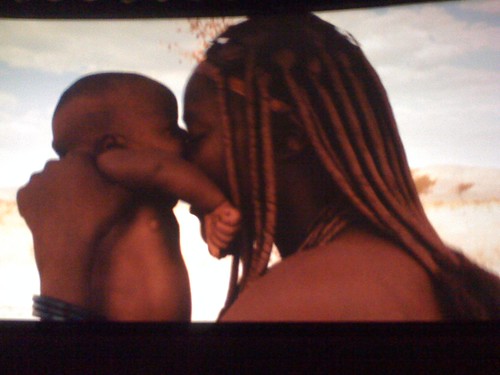
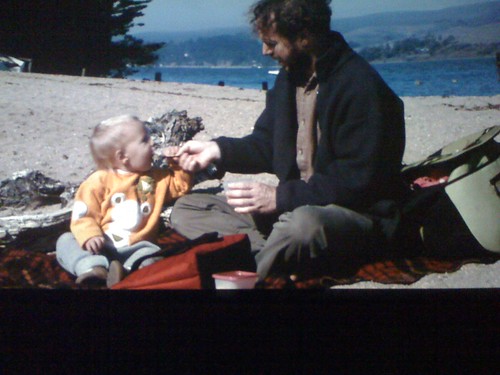
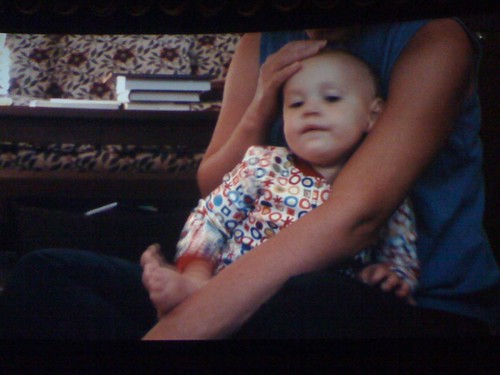
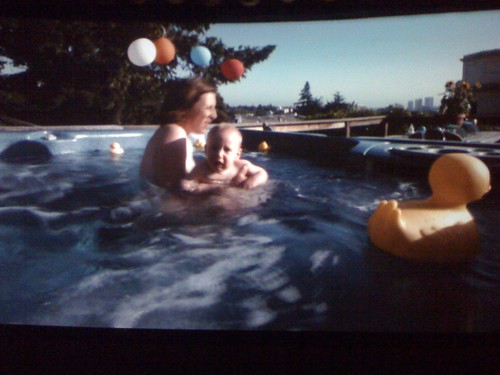
I’ve been trying for some time to track down the new Babies documentary trailer, after first seeing it before Where the Wild Things Are. I remembered feeling troubled by the way the film other-izes and makes cute foreign lifestyles and traditions.

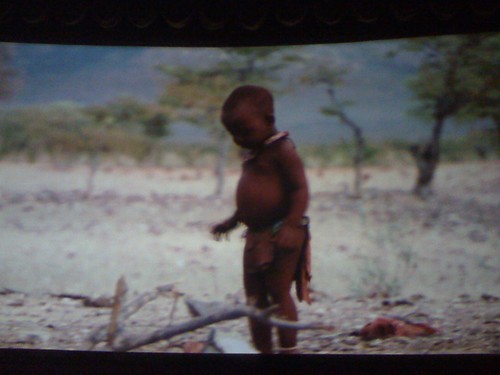
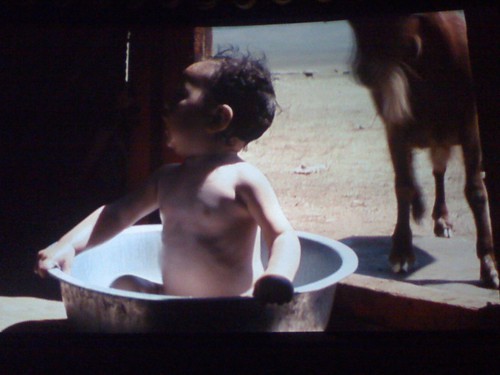
I’m not trying to be curmudgeonly and express distaste for everything, but it feels odd when everyone in the theater is laughing at African and Asian babies (“Ha ha, they’re fighting” and “Ha ha, they have a goat that’s drinking the bath water”) while the whiter babies are simply seen as adorable, as normal.

It doesn’t look like this was the intention of the film or the trailer, but – when we’re filming & editing from a westernized position (I believe the film is French) – these biases arise unintentionally.

I think the trailer will have to be online soon. In the meantime, I snapped a bunch of pics in the theater as I watched Fantastic Mr. Fox as if I were some bootlegger trying to peddle wares in the LA Santee market.

Check out the contrast in depiction of lifestyles (yes, perhaps this is partly the point of the film, but doesn’t it make it even more problematic?). Enjoy.

“yawning, like a cat’s wide open mouth of space”

I think I’m trying to sneak around myself lately. I wonder if this is something I can elucidate in a way that sheds light on my wariness of academia in general.

For starters, I should say that I’ve spent much of this quarter reflecting on how academic talk gets in the way of meaningful talk. (There’s a longer story around process and methodology here, but not one that’s necessarily relevant to this post.)

In any case, I realize that, as a graduate student, I have a perspicacious eye for self-editing. Papers are to be … polished. They are to exude clarity and they are to be a-personal, right? At least the ones that are accepted, are widely read, are seen as real literature. I realize all of these categories are heavily problematic; they are still a part of the reality within the current Ed. research regime.

And all of this is a digression to the real story:

Saturday morning, I woke up with an envelope sealed on my dining room table. I remembered writing a letter to a friend in the early hours of Saturday morning before going to sleep. I apparently failed to save a copy on my computer and also decided to seal it away with nothing but a name on the envelope, until an address could be ascertained.

On the back of the envelope, in my typically messy scrawl, lurking around the southwestern corner, I’d quoted Quincy Troupe for some reason: “There is nothing on the flipside of time but more time.” And that was it. Here I was, faced with the fact that I’d tried to deceive myself – in my weary state, I didn’t want the discerning eye of the alacritous critic and academician to edit the words I’d written. I can vaguely recall anecdotes and thoughts that likely went into the letter, but I can honestly say I don’t recall all of it.

And so I faced a dilemma: Do I send the letter sight un(academically)seen? Or do I pilfer the envelope that is not addressed to me, no longer mine, and sneak into my previous night’s thoughts to ensure I don’t embarrass myself?

I mailed it. I don’t even know if it has reached its intended recipient yet, so there’s no and then to this story. I guess I’m interested in the idea of removing the editor, the academic, the intellect from writing. Not all of the time, of course, but at least during the important times.  I’ve been reading a collection of essays by Ander Monson and I’m struck by the way he both distances and confronts the personal in content and form that are unlike anything else I’ve read recently.

I’ve found files and loose papers of random writing that I don’t remember constructing. In one instance: a poem I remember writing – to the day – while sitting at the newsstand at Book Soup, never quite finding the one word that was missing. I remember the feeling of having lost this word at some point – that it was known by me, perhaps in a dream, or in the shower, or walking the dog, or any of the myriad places that words topple in front of us only to make a just as haphazard getaway. This scrap of paper sits on my table, it’s not awaiting an audience or an editor or a thesaurus; it’s awaiting completeness.

And I think that when I was writing that poem – a casual homage to a tertiary character from the adventures of El Gaviero – I was in a different space. Perhaps a different person. The approach I take to writing without the tearful eye of mind and research is one that feels different. It uses different muscles, the script in which I write literally changes (though it’s still just as messy). And I wonder what would happen if this were allowed to be an unsuppressed voice in research. What would theory, epistemology, pedagogy and all of those terribly overbearing words & ideas look like if we extended things toward a more fluid heart, toward a feeling, toward a hermeneutic of emotion and connection, “to lead you to an overwhelming question…”

Like the letter, perhaps this thought is still en route towards an unexpected conclusion. And like the letter, perhaps it’s better to simply click “publish” before the reigning king of academia returns to change this clause or that.

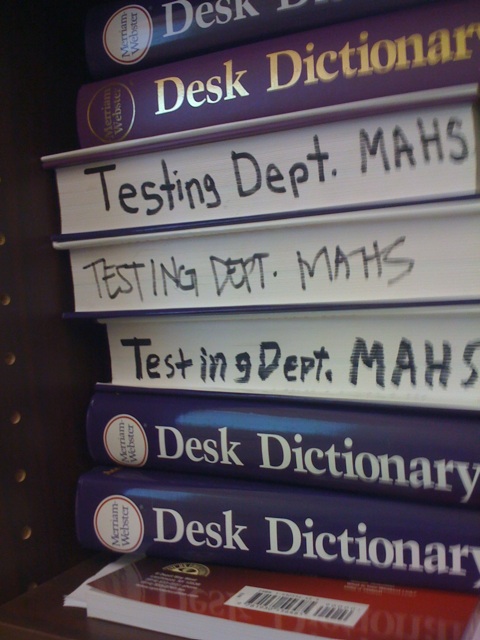
Apparently Its Own Department‽

Saw this on the shelf in our main meeting room the other day and felt creeped out.

Fitting, considering that on the same day, Wayne Au spoke to my Critical Theory class about his book, Unequal by Design. If ever a picture deserved an interrobang, it’s this one (thanks for the link, Peter).

Qualitative, Quantitative, and the Zen of Salinger

“But the thing is, the marvelous thing is, when you first start doing it, you don’t even have to have faith in what you’re doing. I mean even if you’re terribly embarrassed about the whole thing, it’s perfectly all right. I mean you’re not insulting anybody or anything. In other words, nobody asks you to believe a single thing when you start out. You don’t even have to think about what you’re saying, the sarets said. All you have to have in the beginning is quantity. Then, later on, it becomes quality by itself. On its own power or something. He says that any name of God – any name at all – has this peculiar, self-active power of its own, and it starts working after you’ve sort of started it up.” – Franny

********

“I don’t care where an actor acts. It can be in summer stock, in can be over a radio, it can be over television, it can be in a goddam Broadway theatre, complete with the most fashionable, most well-fed, most sunburned-looking audience you can imagine. But I’ll tell you a terrible secret – Are you listening to me? There isn’t anyone out there who isn’t Seymour’s Fat Lady. That includes your Professor Tupper, buddy. And all his goddam cousins by the dozens. There isn’t anyone anywhere that isn’t Seymour’s Fat Lady. Don’t you know that? Don’t you know that goddam secret yet? And don’t you know – listen to me, now – don’t you know who that Fat Lady really is? … Ah, buddy. It’s Christ Himself. Christ Himself, buddy.” – and Zooey

[btw, I always imagined the dialogue in these two stories to be the more suitable adaptation for film than Holden’s whiny jaunt around New York. Glad to find out a good friend actually took a stab at such an effort.]

I Wonder

Will old Kindles also have a distinguishing odor that suggests research, history, familiarity?*

*Likewise, one of the best aspects of doing research at the Clark was being able to look at beautifully bound material dating back five hundred years or more and – there, right there – seeing marginalia in scripts that put my handwriting to shame. Seeing people historically dialogue with the same text I was working with suddenly helped place me in a continuing communal dialogue across time. As I jotted notes on my laptop, I knew that, years ago, someone else was also communicating through the English Reformation-era poetry that my research focused on. And will this dialogue within marginalia (more frequently in library books with notes that are either confounding or mind-blowing) end if the Kindle-ers have their way?