Better Blogging and Why I’m Scared of Online Teacher Voice


On Saturday, I spent the day in DC learning how to be a better blogger. It was an intense day of brainstorming and I want to talk about the two things that are troubling me:

  1. The skills I developed probably need to be funneled down to our students ASAP.
  2. The rather homogeneous assortment of teachers participating in this event–mainly white and many coming from Teach For America–may eventually shape educational discourse in ways that are problematic.

Bellwether Education invited a handful of educators from around the country to sit with known journalists and improve our chops in the world of blogging. Presentations from Ezra Klein, Carl Cannon, Megan Carpentier, and others helped connect the daily concerns and activities of successful journalists with the scheduling challenges of educators.* (That the event occurred the same day that Paul Ryan was announced as Romney’s VP pick meant that the majority of the coaches and speakers were simultaneously helping us and on deadline for their various publications.) It was an altogether enlightening and somewhat frightening prospect for me to look into the mysterious void of the Internet and be told strategies for improving my search engine optimization and building up a strong brand. At the same time, I think the same discomfort that I faced in understanding these types of dispositions is something that educators like myself are going to have to get over and face more directly within our teaching practice.


Blogging and Branding as Required Curriculum?

These skills, new for me despite now blogging here and elsewhere for upwards of six years now, are reminiscent of the kinds of shifts in learning for our high school students as well. Very literally, this daylong intensive seminar was about improving writing and meeting the expectations of a self-selected readership. These are certainly things I want students today to be learning. Is it a matter of time until branding and building up a reliable and respectable number of twitter followers and advertising recent updates on Pinterest with fancy pictures become required components for classrooms? Will there be a standardized exam on the ethics of link-baiting?

Online Teacher Voice and Representation

I am also troubled by issues of representation within the world of teacher blogging. The Bellwether event was one that attendees had to apply to participate in. So while the participants were not necessarily representative of all of the applicants or even of educational bloggers today, it was a largely homogeneous group:

  • Aside from a handful of us, the educational bloggers here were predominantly white.
  • Several of us were no longer teachers (myself included): some ran education-related NPOs or worked for alternative credentialing programs or charter schools.
  • Many of the participants (half? Maybe more?) came from Teach For America and were still relatively new to the teaching profession.

As I looked around the room as one speaker talked about making the shift from a readership of hundreds to a readership in the thousands, I felt slightly uncomfortable. Here we are, a group of educators learning how to help shape discourse about education, and so many of the voices and experiences of teachers I’ve had the pleasure to work with are unrepresented in this space. Granted, Bellwether expressed the intention of continuing these seminars in the future and I’m glad for that. But for now, a disproportionate number of Teach For America teachers are equipped to blog the vagaries and successes of classroom teaching in 2012.

I should be clear that my concerns here are not about being anti-TFA (other writers can go much deeper into that tricky debate). I’m more concerned about representation: if we are mainly preparing to hear from younger teachers being prepared through an alternative model such as TFA, we are also shaping public discourse by eschewing the majority of public teaching voices.

I don’t know how each participant found out about the Bellwether event and decided or was encouraged to apply. I was forwarded an email through the Teaching Ambassador Fellows network. However, it seemed clear that this event–funded by the Gates Foundation–was put on the radar for numerous TFA and Teach Plus folks. While I’m excited about the contributions these bloggers will be making as a result of the seminar, I think it is imperative that individuals from more traditional teaching positions and career paths join the fray.** As I hear about these events in the future, I fully intend to share here. In the meantime, if you are looking to gain a stronger blogging background as a teacher (or even delve in as a current n00b) feel free to send me a note and I’ll pass it directly to Bellwether.

*In somewhat unrelated news, based on an off-the-cuff remark from guest speaker Ezra Klein, I’ve created a new Tumblr: War and Peace and Cats (which will be updated somewhat regularly solely with pictures of Cats and paragraph-by-paragraph additions of the entirety of the Tolstoy text).

** I think part of my concern also comes from the transitional period I am in. As I am no longer the urban high school teacher I was when I first began this blog, I am thinking through how this space may change and still meet the interests of readers expecting reports of in-school mayhem here at The American Crawl.
Ask Anansi Sample Worksheets

This post acts as a sort of digital appendix for my contribution to the Participatory Learning And You! (PLAY!) white paper “Designing With Teachers: Participatory Approaches to Professional Development in Education.” Two sample worksheets from the Alternate Reality Game that I created, Ask Anansi, can be downloaded here.

[I will update this post with a link to the final document once it is available.]

New Column in English Journal

Just a quick note that I have a column in the current issue of English Journal. It’s titled “‘Like Reading’ and Literacy Challenges in a Digital Age.”

The article describes how my ninth graders challenged my understanding of literacies today, the pedagogy of reading audiobooks, and how a 90 year old poem is changing today.

If you’re a subscriber, you can read it here.

Adolescent Literature Book List, Fall 2012

Several months ago I asked readers from Figment to help me develop the syllabus for the Adolescent Literature college course I will be teaching in the fall. I wanted to share the finalized book list with everyone. While not all of the books on this came from Figment, the help I got from YA fans was invaluable. Thank you. I will be posting the reading schedule online soon as well. Our class discussions will take place online and I encourage anyone interested to join in.

Here’s the list along with the ringing endorsements of many Figment readers.

  • The Absolutely True Diary of a Part-Time Indian, Sherman Alexie
  • Go Ask Alice, Anonymous
  • Going Bovine, Libba Bray
    • “Going Bovine is a laugh-out-loud hilarious book about a teenager with mad cow disease. He goes on a cross-country trip to find a cure, and attempt to save the world, along with his annoying friend, a talking gnome, and occasionally a manic pixie dream girl. No one, not him, not the people in the world he lives in, not the reader, is exactly sure what’s going on or if any of it is real, but the craziness only makes it more interesting. It is, surprisingly, deep.”
    • ” Going Bovine is my favorite novel by her. The main character, Cameron, starts a lot like Holden Caulfield but unlike Holden, gets over itself. It’s the journey you wanted Holden to go on to get better. That was Going Bovine and all of its wonderful craziness.”
  • The Plain Janes, Cecil Castellucci and Jim Rugg
  • The Perks of Being a Wallflower, Stephen Chbosky
    •  “This is the book I most strongly recommend. I really hope you choose it. This book seriously changed me. The character of Charlie is just so beautiful and amazing and inspiring. I wouldn’t say the LGBT aspect of it is the most dominant, as much as an amazing coming of age story. There are some amazing quotes, and Charlie is intoxicating. You can’t not fall in love with him.”
  • City of Bones, Cassandra Clare
    • “The Mortal Instruments was Clare’s first series. It is very enjoyable and an easier enough of a read for many teens to have read it. It’s a blend of Paranormal, fantasy, some mystery and romance. I have already expressed my obsession with Harry Potter so seeing more than a dozen similarities between TMI and HP annoyed me. A lot. The series it self was captivating enough and was pretty good. Clare is a rather talented author and readers who might have not ever read/seen Harry Potter, Twilight, Star Wars, Buffy… everything else, may not notice its similarities. I liked it the first time I read it but after rereading it and reading City of Fallen Angels, I have realized it’s more similar to Twilight in its rip off stance than what I originally believed it to be. Though it’s quite devour worthy for teens.”
    • “It is amazing and appeals to pretty much everyone… :)”
  • The Chocolate War, Robert Cormier
  • Looking for Alaska, John Green
    • NOTE: I received A LOT of John Green recommendations for all of his books. I chose not to assign The Fault In Our Stars because I didn’t think I would be able to get through teaching without excessive tears being shed by instructor and students alike.
    • ” Two words: JOHN GREEN.”
    • ” As many people have said, anything by John Green. He has two Printz Awards (and deserves a third for his newest book). They are all amazing.”
    • ” First of all I just love it. It’s funny but emotional and interesting…You honest to god feel like the characters are your friends so it’s unbelievably enjoyable to read. Second, all the people who recommended it to me were boys. I, as a female, adored it and I think it’s pretty promising considering that I know and even number of boys and girls who loved the book. Thirdly, it got me thinking. There are moments in the novel that I literally, months later, cannot stop thinking about and for me that’s the best kind of book. There wasn’t some big revelation (hmm, that point is debatable, but I shall not debate it), but the big event of the book really stuck with me and the consequences were not only thought provoking, but something I don’t think lot of YA (that I’ve read anyway) go into as much detail about. I thought that was refreshing. It’s a very unique book in my mind.
      It’s probably my favourite book ever. I think that had we read more books like that in high school, more people (and a lot more boys) would enjoy English.”
  • Crank, Ellen Hopkins
  • Boy Meets Boy, David Levithan
  • I am Number Four, Pittacus Lore
  • Unwind, Neil Shusterman
    • I thought that book was beautifully done. It’s science fiction and deals a lot with moral questions. It all revolves around the Pro-Life vs. Pro-choice conflict.”
    • “I recommend this book to any person who hasn’t read it because it is so well-written and effective. I have read the book at least 3 times and still feel the impact of the message. I feel like it can also be good for either gender, even though I’m female. Additionally, I think the dystopian quality to it is reminiscent of The Giver by Lois Lowry (which is traditionally read in younger grades) and yet, Unwind is its own entity.” 
  • Y: The Last Man, Vol. 1: Unmanned, Brian K. Vaughn
  • Gossip Girl #1, Cecily von Ziegesar
  • The Pigman, Paul Zindel
  • The Book Thief, Markus Zusak
    • “It is amazing!!!and it has literary merit too 😀 It’s about the holocaust, so it’s pretty deep and sad..”
    • “I really loved the book, the Book Thief by Markus Zusak and I think that’s a great book to do for english class. It’s modern so it has the modern feel with a style of writing teenagers are familiar with but it takes during the Holocaust. I also LOVED the book Sarah’s Key which has a lot of true events about France during the Holocaust; I loved that one as well, but it’s more adult.
    • It’s a crime not to read this book. For realz.”


Discussing Teacher Driven Innovation with Suzie Boss

Over the past couple of days, I’ve been reading Bringing Innovation to School: Empowering Students to Thrive in a Changing World. The book pleasantly showed up in my mailbox over the weekend. It’s author, Suzie Boss, is a prolific blogger and journalist around issues of education and has, on a couple of occasions, asked me to share projects like the Black Cloud. As a result (and full disclosure here), I make a couple of brief cameos in Bringing Innovation to School.

Her book and my work with CDAGS has me thinking about the challenges of sustaining teacher innovation in today’s era of standardization. Suzie agreed to answer a handful of questions about her book and ways to support innovation via email. And, since I’m sure you have much more insightful questions than I do, I encourage you to tweet questions and reactions to the book to @suzieboss.

I want to thank Suzie for her time going over these questions with me. And, as you read over this, I would challenge educators to think about: how would you share the ways you innovate? What challenges do you face and how are you innovating around them?

Why did you want to write Bringing Innovation to School? Where did the impetus come from?

This book grew out of writing and consulting I’ve been doing for the last several years. I spend a lot of time talking with and writing about innovative teachers, the ones who design learning experiences that open up the world for their students. (Your Black Cloud project is a good example, Antero.) For audiences outside the K-12 field, I often write about global innovators who are tackling some of the world’s toughest problems—clean drinking water, illiteracy, climate change, poverty. So what do K-12 education and social change have in common? More than you might guess. When I talk with social entrepreneurs, I hear them describe the same problem-solving strategies that work well in project-based learning. This book is an attempt to bring these two “worlds” together and offer some fresh ideas about how we can prepare today’s students to become tomorrow’s creative problem solvers.
I’ve been seeing the idea of innovation in schools being defined primarily by folks outside of schools – the i3 grants, for instance. I’m wondering if you can help break down what you mean by “innovation” and what it means specifically for teachers?

Innovation is often easiest to spot after it happens. It might be the breakthrough product or new idea that we didn’t know we were waiting for. Once it comes along, we don’t want to go back. (Would you replace your laptop with a manual typewriter?) But innovation involves more than consumer products. It’s an approach to problem-solving that can be applied to any sector to create a “new normal.” For teachers, it’s worth knowing that innovation is not only powerful but also teachable. We may think that breakthrough ideas come about through some kind of alchemy. That’s seldom the case. When you look at the back story of an innovative idea, you tend to find a familiar process at work. It’s a process that students can learn and then apply to tackling any kind of problem. For teachers, it’s worth remembering that innovation involves both thinking and doing. Give students opportunities to generate solutions and then put their ideas to work in practical ways.

The conversations I have with teachers in Los Angeles are often rooted in feelings of frustration. Particularly at Manual Arts, teachers felt like they were being blocked from being able to innovate or create exciting experiences for their students. What are the barriers schools are facing? What kinds of advice do you offer?

I hear you. Plenty of teachers are rightly frustrated by obstacles that get in the way of innovation. They might face an expectation to stick to scripted instruction or lack access to the technology tools that students need to connect and create. In the book, I challenge school leaders to think about how they foster or hinder innovation. One of the action steps I suggest is finding allies who share the goal of developing a new generation of innovators. It’s also important to showcase success when it happens. Let others see what your students are capable to doing and creating when given the opportunity. We can also do much more to encourage a “fail safe” learning environment. Innovators don’t fear failure. They learn from it.
Without giving away all of your book’s findings, can you share a couple of ways educators are sparking in-school innovation? Also, some of your earlier work focuses on project based learning. I’m wondering if you can talk briefly about the connection – is PBL innovative?

Project-based learning doesn’t guarantee that students will be innovators, but good projects can set the stage for innovation to happen. For example, the book takes a close look at one project in which students designed an inexpensive water purification system for villagers in Haiti. It has all the elements of high-quality PBL, including core academic content, teamwork, research, problem solving, and public presentations of learning. But it goes beyond what we see in typical projects. These students were determined to “go big.” Leveraging their communication skills, they raised funds to travel to Haiti, install the devices, and teach villagers how to maintain them so they will have a sustainable source of clean drinking water. The project expanded from one science class to engage the entire district, plus many community members. Part of innovative thinking is knowing how to engage others in your good ideas. These students figured that out—and they’ll never forget what they accomplished.  Throughout the book, there are many more examples of projects that start with a strong PBL foundation and build in opportunities for students to take risks, learn from mistakes, and put good ideas into action.
Finally, I’ve been thinking lately around the challenges of teacher training and professional development. Is innovation something you think can be taught to teachers? How can principals and administrators support teacher innovation?

Early in the book, I encourage teachers and school leaders to think about their own innovation profile. Are they action oriented? Do they know how to network? Can they look ahead to imagine the benefits of new ideas? School leaders need to encourage these traits, in themselves as well as in their staff, if they’re serious about developing a new generation of innovators. We can also offer teachers professional development experiences that let them learn and practice the process of innovation. I did a lot of field work for this book. One of my most enjoyable experiences was taking part in an innovation workshop for teachers at the Henry Ford Learning Institute in Detroit. It was immersive, energizing, instructive, challenging—and fun. How often does professional development feel like that?

Rhizomatic Listening: On Shuffling Audiobooks

While in Los Angeles, I spent a lot of time sitting in traffic. Directly related to this, I spent a lot of time sitting in traffic listening to audiobooks. At one point, I got frustrated with the insanely slooooow pace at which most book are narrated that I started listening to audiobooks at double speed. The shift is disorienting at first, listening to a reader spin manically into hyper-speed. The thing is, I can only (easily) do that with books I download from Audible. CDs checked out from the library and MP3s I download have to go through a lengthy process to be considered “books” by my iPhone and are treated like music files, which is where things get interesting …

See, for a long time I resisted the shift from listening to an album to listening to individual tracks. But somewhere in the early 2000s I caved and my iPod is now filled with a rotating repertoire of evolving playlists created for specific times, moods, and places:

The success of these playlists is contingent on the iPod’s shuffle function:

Each playlist preserves a feeling, but never the exact same experience.

The thing is, if I switched from listening to a playlist to an audiobook, I would often forget to turn off the shuffle button. For books that are downloaded in Audiobook, again this can’t happen and even if it did it wouldn’t matter as much. Take for example a couple of YA books I purchased on Audible:

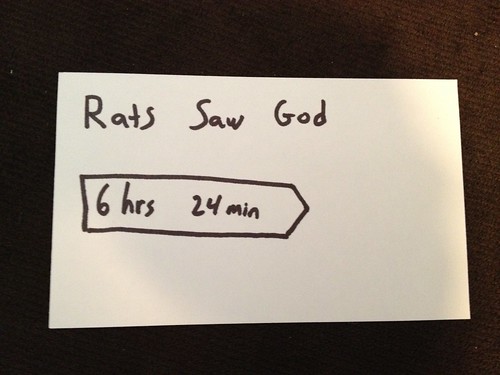
Each of these is a relatively short book and is downloaded (and consumed) as a single file. Rats Saw God is a solid uninterrupted 6 hour and 24 minute listen (or, if you’re like me, a 3 hour and 12 minute listen).

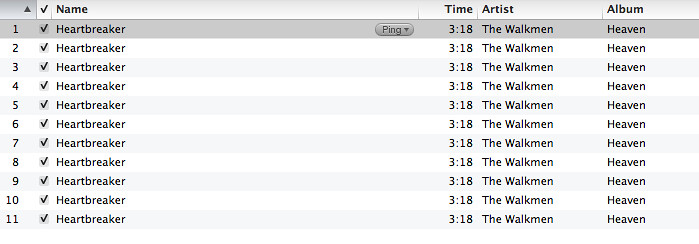
Even if you wanted to shuffle these books, you couldn’t. They are single files. It would be like creating a playlist with one song and hitting shuffle:

A Feast for Crows, a much longer book (topping out just under 38/19 hours of listening time) is downloaded as four separate files. You could shuffle these 8 hour tracks, but the narrative will have progressed so far ahead that it will become immediately obvious when the four chunks are not played in the correct order.


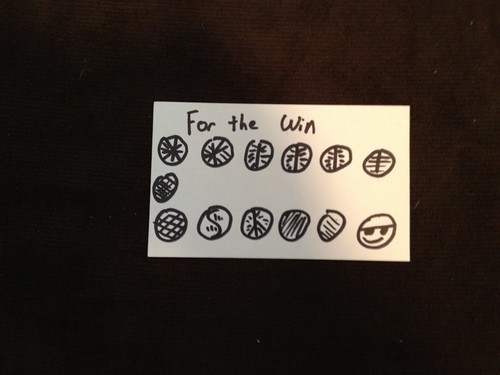
However, let’s take a CD or MP3 example. I bought a (DRM-free!) copy of Doctorow’s For The Win sometime last year. It is downloaded as a series of MP3s that can be easily burned to 13 discs. That’s a lot of MP3s:

If I don’t import these into a playlist in the correct order the 3 or 5 minute files will play in a haphazard fashion, creating a new narrative line not intended by the author.

And this is what I’ve been thinking about: the shift in narrative as a result of audio shuffle. Though time is cyclical for me (It’s morning then night and I eat breakfast and then lunch and then dinner and go to sleep), the ways I perceive and work throughout the day are anything but (I open Word to start writing and then get a cup of coffee and check my phone and write a paragraph and read a chapter of a book and then delete that paragraph and write a title for the Word document and yell at the dog for barking and then add a new sentence and then put on some music which reminds me to see if Martha Wainwright has a new album anytime soon-she does not-and then I start chatting with a friend online … and eventually write something of substance in the Word file).

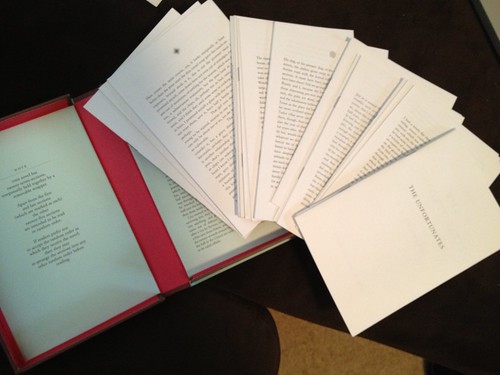
Some novels incorporate the chance-element of shuffle into their structure. But they’re usually experimental and unfulfilling as traditional narratives. B.S. Johnson’s The Unfortunates gets close. It’s a series of pamphlets that are shuffled together to create a new novel for each reading:

Cortazar’s Hopscotch supposedly works in random-ish order.

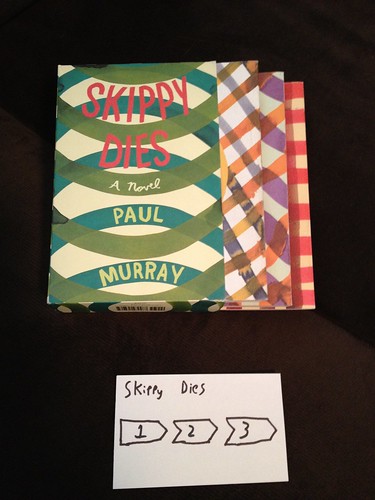
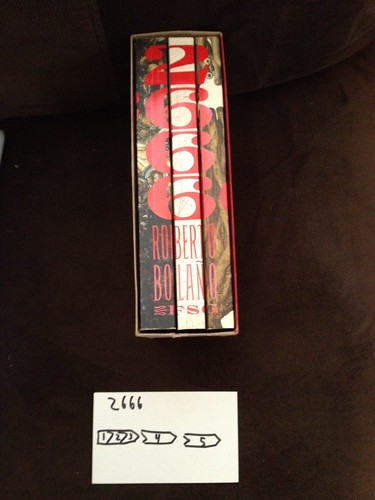
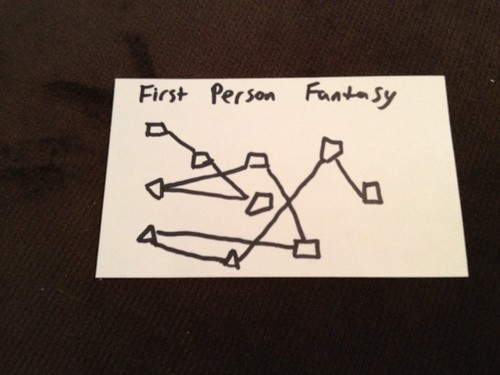
I think a more controlled chaos could also work. I think of the three parts of Skippy Dies and, considering Paul Murray tells you exactly what happens by the end of the book in the title, wonder how my experience would be altered if I shuffled the three parts of the books. Ditto the five parts (and three bound volumes) of Bolano’s 2666.


I think of Deleuze and Guittari’s notion of the rhizome. A model for looking at research and culture, the notion of the rhizome differs significantly from traditional tree-like hierarchies. Seeing multiple points of entry and exploration, they write that “any point of a rhizome can be connected to anything other, and must be.” The world is shuffled. We curate rhizomatic experience everytime we create a playlist – a digital piñata of randomly falling sonic riches.

What would happen if I were able to curate my reading library and create a playlist?

“Today I feel like reading a Murakami playlist-not an anthology-but a new Murakami narrative shuffled only for me” or “I’m going to cozy up with a read-list of contemporary Russian authors in translation.” Or “You know, I feel like a discordant mix of John Ashberry and Shel Silverstein.”

Music products are being produced in this way now:

The latest release from Nicholas Jaar (on the right) is a cube of music with two headphone inputs. Listeners are subjected randomly to the tracks stored in the device’s memory. Pragmatically, I won’t know which song is up next or even what it may be called.

A rhizomatic listening experience is one that can be parsed every which way. Purists (myself included) would argue that this is a bastardization of the art form. “Hendrix wanted you to listen all the way through, man.” And they/we’re right. But it seems like print culture can by shuffled in ways to create new narratives budding from the old.

Play with Your Food

Maybe it is just a dwindling attention span, but I like playing with my food. I don’t mean that if you take me to a fancy restaurant I turn into an orangutan and throw things in the air or peel bananas with my feet.* But things like Rosca de reyes make eating a playful experience.

At a local sushi restaurant, Ally and I ordered what they called the Roulette Roll. Served in a circle, one of the eight pieces of sushi was filled with chili seasoning. Each bite of the roll became a risky dare.

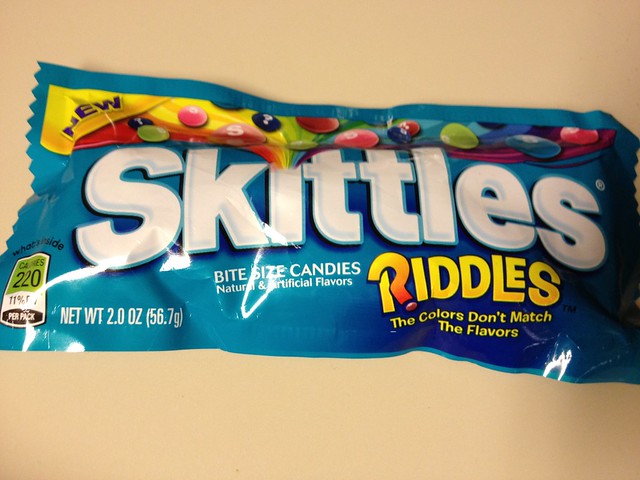
So when we bought these Skittles yesterday, I was pretty excited. It’s pretty awesome to be able to buy food that deceives you.

And then Ally pointed out that pretty much every pack of Skittles I eat functions this way. Being colorblind pretty much ensures that I never know exactly what colored candy I’m eating. Jelly Beans, in particular, are a dangerous proposition…

There has to be something rewarding in encouraging kids to hack their food, right? Turn your licorice into a straw, pretend a gummy bear is a festering boil on your face, make those bread rolls do the Charlie Chaplin dance… aside from embarrassing parents, that’s surely fostering valuable out-of-the-box thinking.


* Though to be fair, if I was actually capable of peeling bananas with my feet, I would probably do so all the time and in as public of places as possible.

I Will Mail You Souls of Black Folk

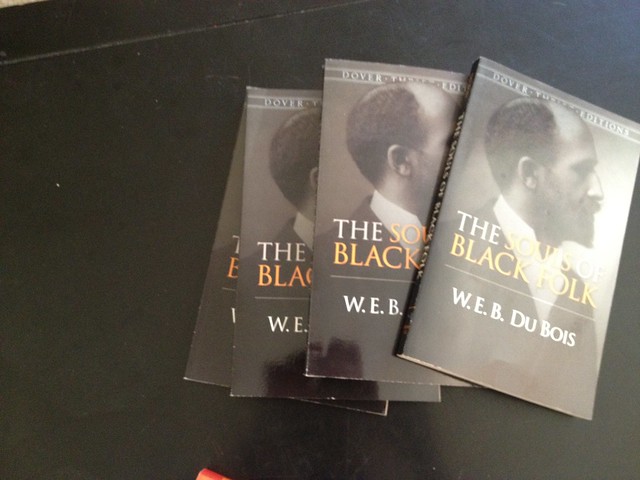
Seriously. Unpacking I realized these were books from class sets I forgot to donate before leaving.

I think I only have four copies, but a few more may show up. These are the no-frills Dover editions. If you have never read this book, you should … and I’ll send you a copy for free! Send me an email with your address and it’ll get in the mail sooner or later.

Note: I would lean toward expecting this “later” in “sooner or later,” so if you need the book for a class you are taking, I wouldn’t count on this… I’m still working on unpacking office supplies like envelopes and trying to properly navigate myself to the nearest post office.