
[If you would like a PDF of the above info to distribute, it is available here.]
[If you would like a PDF of the above info to distribute, it is available here.]
Every poem that works as a poem is original. And original has two meanings: it means a return to the origin, the first which engendered everything that followed; and it means that which has never occurred before. In poetry, and in poetry alone, the two senses are united in a way that they are no longer contradictory. – John Berger
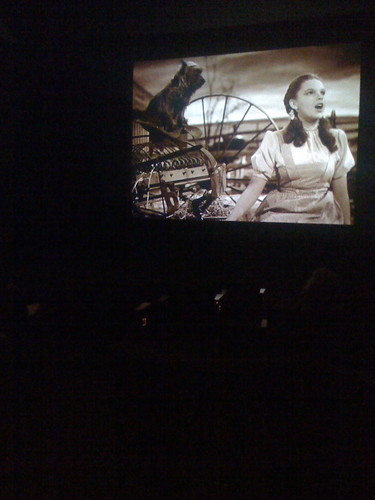
Over the past two weeks, approximately forty students from Manual Art have participated in a film intersession course I am co-teaching with Peter Carlson. These students have watched a handful of universally lauded films, critiqued them, and created & produced their own films. And although Peter and I will be writing in more detail about the pedagogy and instructional experiences of our current intersession film class, I wanted share a few snippets of what makes this such a fun class to be a part of.
Again, I will be posting an update about the upcoming film festival, Peter and I will be drafting a more comprehensive description of the work, and I am hoping to rope in a few students to author posts about their experiences as well. Stay Tuned.
The video below was filmed shortly before the Manual Arts members of the UCLA Council of Youth Research made one of their most powerful presentations to parents, teachers, district officials and peers at the Downtown Labor Center two weeks ago. I don’t want to add any lengthy exposition here other than to highly encourage you to simply click the play button below.
Katie’s Council of Youth Research Pep Talk from Antero Garcia on Vimeo.
(Katie, thank you for being willing to share this moment with others.)
I wanted to share a couple of recent videos that I’ve been rewatching.
First, while I don’t agree with all of Jane McGonigal’s arguments, I’m genuinely excited by her recent TED talk. At this point, I am strongly aligned with the idea of connecting game play to real world change. You could do a lot worse than spend 20 minutes watching Margolis’ presentation.
I’ve been following Jane’s work since Greg Niemeyer showed me World Without Oil (A bit of trivia: Greg was also one of the members of Jane’s dissertation committee). Her article, “Why I Love Bees” fits directly into my research on the Black Cloud. Similarly, Evoke seems like an interesting premise. And while I understand what she’s doing with her argument by contrasting the time youth spends playing video games with the time they spend in schools, I think this is where a lot of researchers are missing a big opportunity. As a field, we continue to look at the informal environments for game play and research. It’s easier to do so – a select group of interested individuals, less controlled curriculum, easier access issues, etc. However, think about how the power of game play for change could be compounded within formal learning environments. I’m working on developing material around this within my classroom, and expect game play to fit somewhat prominently into my dissertation. So if it sounds like I’m grandstanding or being a bit presumptuous here, it’s more personal throat-clearing than anything else.
Second, I just saw We Live in Public and found it to be an absolutely compelling and terrifying documentary. I’m not clear about what disqualified it for an Oscar nomination, but think it could have given The Cove a run for its money. The foundational arguments about privacy, surveillance and our culture’s relationship with the media are extemely prescient. As I continue to think about how student-generate media products will be created, shared, and assessed within my classroom, these are the topics I am concerned about. Ownership of data, of our lives, and of conceptions of propriety is in flux and the experiments that Josh Harris challenges us to face this fact.
His next project sounds equally as preposterous as past efforts, and I’m interested (if not extremely wary) about what will transpire if he gets the funding for this. Though I encourage you to watch his pitch below, I highly recommend seeking out and viewing We Live In Public for a better sense of context.
Fascinated by the fact that San Quentin State Prison is on Yelp.
Though it looks like this started out as a snarky joke, I’m loving the re-appropriation of the space for conversation about prison conditions and tourist mentality. In some ways I think having students look at review sites like Yelp as sites of civic participation offers tremendous potential. I think students accessing and engaging in conversations through these venues offer the kind of imagination that’s lacking in much of today’s youth-organizing and public participation methods.
Somewhat reminds me of what’s happening with book reviews for The Possessed. The debate around the Macmillan vs. Kindle situation is clouding authentic book review. (Full disclosure, I found this site from reading the author’s blog. This guest post, in particular, is fantastic.)
Only tangentially related, I’ve been feeling skeptical about crowd sourcing and grant funding. I’m excited about the Refresh Everything project, but feel it’s going to mainly help those that need help less than those that can’t directly connect and leverage mass online participation (like, say, public school teachers and students in South Central Los Angeles). I’m still wrapping my head around this but when my Twitter and Facebook feeds are full of advocates to vote for TFA and other well-established programs, I can’t help but wonder what other voices are being left out. More to come on this topic – there is, after all, a whole year for this program.

[From the introduction of Stop It: Our Future, A Threat ]:
At the beginning of this quarter, the students in my third period American Literature class decided to engage in a focused inquiry on the history of South Central Los Angeles from a literary lens. One of the texts that our class read was Twilight: Los Angeles, 1992, by Anna Deavere Smith. This documentary theater project was based around a series of interviews with key witnesses and individuals related to the Rodney King Riots. Using Smith’s model of including word-for-word interviews, our class attempted to document the ideas, questions, and frustrations that the Manual Arts community is facing in today’s economic crisis. These monologues interweave various language practices and, though some of the grammar will occasionally confound, reflect the naturally occurring poetry of everyday human speech. This work is offered not as a definitive statement of the effect of the budget cuts in South Central, but as an opportunity to engage in a continuing dialogue with the voices of the present.
You may download a copy of this work here.
Within a week and a half, my third period class identified a topic for inquiry, interviewed, edited, and arranged an entire play in six thematic acts. The title, the individuals interviewed, and the sequencing were all decided democratically within the classroom. The work’s blemishes and typos and occasional faltering in clarity are part of its charm. Students will be introducing and discussing this work to the Manual Arts community on Tuesday at lunch. After finishing the play, students reflected on the varied viewpoints represented and identified next steps for our collective research. This work will be continued when the students return on-track in May.
– My cat is pregnant.
– Cats are always pregnant! What the hell!?
Came to work today and was pleased to see the bungalows covered in new murals by esteemed LA graf writers and students.
I was out of town on the Saturday when the muralists held a public event for the community to attend. However, a colleague described it as “our Woodstock – a once in a lifetime, magical event.”
The murals are incredible and anyone that’s driven through the city will recognize many of the artists represented in these new pieces.
I sent a student to snap photos with my phone during first period today and share the pix below.
[flickrslideshow acct_name=”24051579@N03″ id=”72157623362938965″]
Overall, I can say I was both impressed and pleased with the way the Digital Media and Learning Conference went. It was certainly one of the more exciting conferences I’ve dragged myself to in the past few years. I think the interdisciplinary nature of DML made for much richer conversations than the kinds I find myself falling into at ed conferences.
I’ve left with a huge list of people to stay connected with and a ton of areas for collaboration with my students and colleagues at Manual Arts. In particular, many of the programs taking place at USC are right up the alley of the work I see our 9th grade academy tackling come July. Would love to build a more extensive relationship with USC that extends beyond the generally small (and non-b-track) opportunities of the NAI program.
I left with three general critiques to keep in mind for next year’s conference:
Again, I need to emphasize that this was a really great conference. I’m excited about being connected next year. I hope that there will be more of my colleagues in the room next time (and keeping it free will be key for getting classroom teachers to be willing to venture out with the budget crisis nowhere near an adequate conclusion).